
Feb 23, 2012
Feb 15, 2012
Baby First Portrait
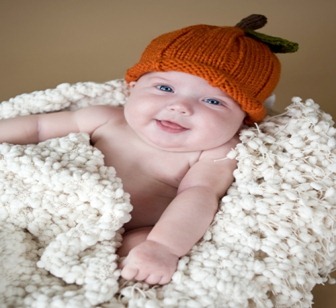
Baby’s first portraits are treasures that you will cherish the rest of their lives… use these tips and hints to create the perfect first portraits!
Think Twice Before You Go It Alone!
It might seem simple to grab your digital camera and snap off a few pictures, but setting up the right lighting, angles and background can be quite a chore for an overwhelmed new parent. Using the services of a professional allows you to just relax and enjoy every second with you new little one, confident that your portraits will turn out great the first time.
Have Your First Portraits Done In Hospital
Most baby photographers will come to the hospital to take those precious first portraits. Baby will change faster in these first few weeks than you realize, so capture their very first images as soon as you can. Plus, the sooner your pictures are ready, the sooner you can start sending them to family and friends!
Prepare Yourself
Before the photographer arrives, make a list of the photos and sizes you will need. Think of all of the close friends and relatives you will want to send a photo to, as well as a pose you would like to see on your birth announcement cards.
Have your check book or credit card with you at the hospital to complete your order the day the portraits are taken.
Getting Baby Ready
Have your baby bathed, fed and freshly changed when the photographer arrives. Stay close throughout the photo shoot, without getting in the way, so baby feels safe and protected and doesn’t fuss.
You may have packed a special outfit for baby’s first portraits, but you may want to rethink your choice. The best baby portraits often feature the baby naked or simply wrapped in a receiving blanket. Choosing solid, simple colors like black and white for the background and clothing help to keep baby as the center of attention.
Also remember that your portraits will hang in your home for years to come; solid, plain colors will compliment any décor.
The Perfect Pose
You will receive most of your direction from the photographer, but it helps to have realistic expectations. At such a tender age, the baby must be photographed either laying flat or being held. Never try to prop your baby up to a sitting position for their first portraits.
Use a brightly colored toy or simply the sound of voice to entertain and distract your infant during the photo shoot. Don’t be discouraged if your baby doesn’t seem to be cooperating; an experienced photographer should be used to the finicky nature of new-borns!
Do-It-Yourself First Portraits
If you decide to shoot your own first portraits, patience is your greatest ally. Have your baby lying securely on a blanket on the floor or on a large bed. Don’t use your flash if it can be avoided.
Once you capture the perfect shot, the one that is focused, with Baby’s eyes open and nothing obstructing the background, change angles and keep shooting! Give yourself plenty of options to choose from.
Source(blog.myexpression.com)
Think Twice Before You Go It Alone!
It might seem simple to grab your digital camera and snap off a few pictures, but setting up the right lighting, angles and background can be quite a chore for an overwhelmed new parent. Using the services of a professional allows you to just relax and enjoy every second with you new little one, confident that your portraits will turn out great the first time.

Have Your First Portraits Done In Hospital
Most baby photographers will come to the hospital to take those precious first portraits. Baby will change faster in these first few weeks than you realize, so capture their very first images as soon as you can. Plus, the sooner your pictures are ready, the sooner you can start sending them to family and friends!
Prepare Yourself
Before the photographer arrives, make a list of the photos and sizes you will need. Think of all of the close friends and relatives you will want to send a photo to, as well as a pose you would like to see on your birth announcement cards.
Have your check book or credit card with you at the hospital to complete your order the day the portraits are taken.
Getting Baby Ready
Have your baby bathed, fed and freshly changed when the photographer arrives. Stay close throughout the photo shoot, without getting in the way, so baby feels safe and protected and doesn’t fuss.
You may have packed a special outfit for baby’s first portraits, but you may want to rethink your choice. The best baby portraits often feature the baby naked or simply wrapped in a receiving blanket. Choosing solid, simple colors like black and white for the background and clothing help to keep baby as the center of attention.
Also remember that your portraits will hang in your home for years to come; solid, plain colors will compliment any décor.
The Perfect Pose
You will receive most of your direction from the photographer, but it helps to have realistic expectations. At such a tender age, the baby must be photographed either laying flat or being held. Never try to prop your baby up to a sitting position for their first portraits.
Use a brightly colored toy or simply the sound of voice to entertain and distract your infant during the photo shoot. Don’t be discouraged if your baby doesn’t seem to be cooperating; an experienced photographer should be used to the finicky nature of new-borns!
Do-It-Yourself First Portraits
If you decide to shoot your own first portraits, patience is your greatest ally. Have your baby lying securely on a blanket on the floor or on a large bed. Don’t use your flash if it can be avoided.
Once you capture the perfect shot, the one that is focused, with Baby’s eyes open and nothing obstructing the background, change angles and keep shooting! Give yourself plenty of options to choose from.
Source(blog.myexpression.com)
Feb 14, 2012
Early Brain Development In Kids.
Hi moms we come across many doubts about our kids brain development. When they act very elderly and doing naughty activities which we cant believe. Here is some information which will clarify all your doubts.
A number of factors influence early brain development in kids. These important factors include genetics, food and nutrition, responsiveness of parents, daily experiences, physical activity and love. In particular, parents should be aware of the importance of furnishing a healthy and nutritious diet, giving love and nurturing, providing interesting and varied everyday experiences, and giving children positive and sensitive feedback for early brain development.
Most of the brain's cells are formed before birth, but most of the connections among cells are made during infancy and early childhood.Early experience and interaction with the environment are most critical in a child's brain development.
- A 3-year-old toddler's brain is twice as active as an adult's brain.Hence the brain development is twice for kids.
- Talking to young children establishes foundations for learning language during early critical periods when learning is easiest for a child.
What children need most is loving care and new experiences, not special attention or costly toys. Talking, singing, playing and reading are some of the key activities that build a child's brain development and also strong bonding with the parents.
The "prime time" for visual and auditory development, or a child's capacity for learning to see and hear, is from birth to between 4 and 5 years old. The development of these sensory capacities is very important for allowing children, especially babies, to perceive and interact with the world around them. During the first few months, especially, babies need to see shapes, colors, objects at varying distances and movement for the brain to learn how to see. Babies also need exposure to a variety of sounds so their brain can learn to process that information and allow for responsiveness by hearing something.
The "prime time" for language development and learning to talk is from birth to 10 years of age. Children are learning language during this entire period.
The development of a child's brain holds the key to the child's future. Although the "first years last forever" in terms of the rapid development of young children's brains, the actual first years of a child's life go by very quickly. So touch, talk, read, smile, sing, count and play with your children. It does more than make both of you feel good. It helps a child's brain development and nourishes the child's potential for a lifetime.
The "prime time" for visual and auditory development, or a child's capacity for learning to see and hear, is from birth to between 4 and 5 years old. The development of these sensory capacities is very important for allowing children, especially babies, to perceive and interact with the world around them. During the first few months, especially, babies need to see shapes, colors, objects at varying distances and movement for the brain to learn how to see. Babies also need exposure to a variety of sounds so their brain can learn to process that information and allow for responsiveness by hearing something.
The "prime time" for language development and learning to talk is from birth to 10 years of age. Children are learning language during this entire period.
The development of a child's brain holds the key to the child's future. Although the "first years last forever" in terms of the rapid development of young children's brains, the actual first years of a child's life go by very quickly. So touch, talk, read, smile, sing, count and play with your children. It does more than make both of you feel good. It helps a child's brain development and nourishes the child's potential for a lifetime.
Kids are the wonderful gifts enjoy the fruit of parenthood.
Perfect Bra Fit Tips
This page is dedicated to all women who struggle to find the perfect bra. If you have bra fitting problems like puckering, spillage, need a full-figure bra, or a small bra, this is the place for you.
Measuring is just the start
There are three main problems with bra fitting and sizing. The first is that the measuring that many sites suggest is really only the start. Once you measure, you need to figure out which bra style and brand best fits your body shape.
Department store sizes are limited
The second is that if you're very small, large, shallow, or an unusual size, such as 30A, 40B, 32E, or a 38J, it's really hard to even find a bra in your size (let alone one that fits properly).
Most department stores carry 10-11 bra sizes, and focus on average size bras for average size women (like 34B or 36C or 34D).
Finding an AA or A bra can be a nightmare. There are plenty of 32As, but what if you need a 30A? Or a 36AA? Or a 30B? If you're small-busted, the cups on your bras pucker, or you have trouble filling out a bra, these bras are for you. They come in sizes as small as 30A.
AA, A, and B Bras
Measuring is just the start
There are three main problems with bra fitting and sizing. The first is that the measuring that many sites suggest is really only the start. Once you measure, you need to figure out which bra style and brand best fits your body shape.
Department store sizes are limited
The second is that if you're very small, large, shallow, or an unusual size, such as 30A, 40B, 32E, or a 38J, it's really hard to even find a bra in your size (let alone one that fits properly).
Most department stores carry 10-11 bra sizes, and focus on average size bras for average size women (like 34B or 36C or 34D).
Finding an AA or A bra can be a nightmare. There are plenty of 32As, but what if you need a 30A? Or a 36AA? Or a 30B? If you're small-busted, the cups on your bras pucker, or you have trouble filling out a bra, these bras are for you. They come in sizes as small as 30A.
AA, A, and B Bras
Feb 13, 2012
Activities For Children Who Are Just Walking
As any parent will tell you, kids are moving all the time. Nature has programmed kids to move, but many of them are not moving because they are stuck in front of the television, the computer, and computer games. This is where parenting comes in, because you, the parent or grandparent, can foster children's exercise.
Kids should wear sturdy shoes and comfy socks without holes. (Leave the flip-flops at home.) They should also wear caps or hats to protect them from the sun and sunscreen. Do some stretching exercises with your kids beforehand. Give each child his or her own water bottle and pedometer. Measure each child's stride before you start these walking activities.

COUNT THE BIRDS. Young kids count the number of birds they see during the walk. Older kids and adults identify the birds by name. Read about the birds in a bird book when you get home.
COLOR SEARCH. During the walk kids look for one color, such as red. Anything they see that is that is this color, such as a car, stop sign, and a red jacket, counts as one point. Who saw the most things?
BABY STEPS. Place two plastic ice cream buckets on the sidewalk or in the yard. Using baby steps - touching the heel of one foot to the toes of the other - kids walk between the buckets.
LONGEST STRIDE. Place two plastic ice cream buckets on the sidewalk or in the yard. Using their longest stride, kids walk from the first bucket to the second.
BACKWARD BOUNCE. Place two plastic ice cream buckets on the sidewalk or in the yard. One bucket is the starting "line" and the other bucket is the finish "line." Kids walk backwards from start to finish.
AROUND THE TOWN. Using poster board or grocery store boxes, make location signs for your community: city hall, library, school, recreation centre, movie theatre, baseball field, and similar locations. Number the signs and arrange them in a circle. Kids start at number one and walk round the town. How many steps did each child take?
SPEED WALKING. Each child wears a pedometer as his or her waist. At the sound of go, kids walk as fast as they can across the playground or a field. Who took the most steps? Who took the least?
RUN-WALK RACE. Repeat the speed walking activity, only this time the kids run 10 steps and walk 10 steps.
STEP AND SLIDE. Repeat the speed walking activity, only this time the kids step with their feet, slide their right feet up to the left, and continue walking this way until they have crossed the playground or field.
Don't let your kids become couch potatoes. Get them off the couch and keep them moving. Keep yourself moving, too. Everyone in the family can walk the fitness trail to better health and a better life.
source(EzineArticles)
Feb 10, 2012
Travel During Pregnancy
Worried that travel during pregnancy could leave you exhausted and uncomfortable? We've got tips for making your journey as enjoyable and comfortable as possible.
Assume, for instance, that you're going to be delayed en route to the airport, railway station or destination and schedule plenty of extra time to get there. Call the airport/ railway station before you leave to ensure that your flight or train is not delayed. Travel light! Ideally, pack only what you can carry. If that's not possible, buy a suitcase with wheels (strolley) or use a luggage trolley at the airport. If you are not checking in luggage and are carrying a bag as hand luggage, you could do a tele-check in and avoid queues at the airport. Avoid lugging luggage around at railway stations. Engage a porter to help you out with boarding your luggage on train.
Most importantly, bring your sense of humour. Raging hormones may leave you ready to scream or cry. Instead, do your best to take long queues or delayed flights in your stride. Relax -- and tune out -- by reading or listening to music on your iPod, mobile or Walkman.
Here are some few tips to follow:
Reduce stress
Staying home for nine months isn't the only way to avoid travel stress. Some simple planning strategies will go a long way toward reducing your anxiety.Assume, for instance, that you're going to be delayed en route to the airport, railway station or destination and schedule plenty of extra time to get there. Call the airport/ railway station before you leave to ensure that your flight or train is not delayed. Travel light! Ideally, pack only what you can carry. If that's not possible, buy a suitcase with wheels (strolley) or use a luggage trolley at the airport. If you are not checking in luggage and are carrying a bag as hand luggage, you could do a tele-check in and avoid queues at the airport. Avoid lugging luggage around at railway stations. Engage a porter to help you out with boarding your luggage on train.
Most importantly, bring your sense of humour. Raging hormones may leave you ready to scream or cry. Instead, do your best to take long queues or delayed flights in your stride. Relax -- and tune out -- by reading or listening to music on your iPod, mobile or Walkman.

Here are some few tips to follow:
-
Maximise your energy
-
Eat smart
-
Take frequent breaks
-
Get advice on vaccinations
-
Avoid thrush
-
Choose safe activities
-
Carry your medical kit
source(babycenter)
Feb 7, 2012
Tips For Feeling Comfortable With Yourself And Your Body
Most of us have had concerns about our bodies since we were teenagers. Maybe our stomach is too round, our chest too flat, or we have pimples breaking out on our body in weird places. Whatever your concerns are about your body, worry no more. It’s time to love your body for what it is- yours. After all, you only get one.
Wear your clothes for you.
The main thing that women need to learn is to worry less about how others see them and only be concerned with how we see ourselves. Wear your clothes for you; don’t try to impress others by wearing clothes that make you feel insecure. Purchase and wear things that make you feel confident and comfortable. If you have the mind-set of “Would so-and-so approve of this?” then you will never fully be satisfied with how you look.
You are unique. Embrace it.
It’s important to understand that while we are all similar, we all have different bodies. Some women may be taller, shorter, rounder or slender than others, but we each have our own unique traits. Think about what your favourite physical traits are and embrace them; be grateful that you have those traits.
As for your less-favoured traits, ask yourself what you don’t like about them. Then ask yourself why you don’t like them. Admire your natural beauty and appreciate your curves. Don’t think, “I wish this were smaller/bigger/normal,” but instead think, “I look great today!” Then you will see that those weaknesses are not so bad after all.
We all have flaws.
No one is perfect; we all have flaws. Have you heard this before? Believe it. We have all battled with acne, weight issues and uneven skin tones. It’s normal. The hard part is realizing how to deal with these things and accepting them as a part of who you are. Don’t think of that as a bad thing- it’s a learning experience. Learn to love your body and take care of it. It’s only up to you to do so.
Ignore the media.
Don’t let your eyes fool you when you are flipping through the pages of high fashion magazines and tabloids. The photo spreads are edited with computer software and are not natural. Think less about how the women look and focus more on the message of self-empowerment.
The main thing to understand is that you are your worst and only critic. Don’t be so hard on yourself. If you don’t love yourself for who you are, you will spend the rest of your life unhappy. Start loving the skin you’re in.
source(thetwentylife)
Feb 3, 2012
Easy Tips To Potty Train Your Kids
Many parents are unsure about when to start toilet teaching or "potty training." Not all kids are ready at the same age, so it's important to watch your child for signs of readiness, such as stopping an activity for a few seconds or clutching his or her diaper.
Most children begin to show these signs between 18 and 24 months, although some may be ready earlier or later than that. And boys often start later and take longer to learn to use the potty than girls.
Instead of using age as a readiness indicator, look for other signs that your child may be ready to start heading for the potty, such as the ability to:
Most children begin to show these signs between 18 and 24 months, although some may be ready earlier or later than that. And boys often start later and take longer to learn to use the potty than girls.
Instead of using age as a readiness indicator, look for other signs that your child may be ready to start heading for the potty, such as the ability to:
- follow simple instructions
- understand words about the toileting process
- control the muscles responsible for elimination
- express a need to go verbally
- keep a diaper dry for 2 hours or more
- get to the potty, sit on it, and then get off the potty
- pull down diapers, disposable training pants, or underpants
- show an interest in using the potty or wearing underpants
Health of body and mind is a great blessing, if we can bear it.
Feb 2, 2012
Whitehead Removal Tips
Whitehead is acne that looks as a tiny white bump on the skin. It is caused due to clogging of hair follicle pore with dirt, oil, or bacteria. Whitehead removal tips are provided here briefly to remove these bumps and to take good care of your pores. Frequently, there is a presence of more than one whitehead on the affected skin. Right acne methods help us to remove these whiteheads more effectively.
Whitehead Removal Tips
Detoxify Your Body
- This is the best long-term method which removes whitehead at home without any medicine.
- Whiteheads mostly occur due to bacterial infections which get out of control due to toxins in your body.
- You can use lemonade fast as a detoxifying agent. The lemonade is made from organic honey, freshly squeezed lemons, and purified water. You can add cayenne pepper if you want to speed the detoxification. This can be used during fasting for 3 days.
- If fasting is not possible, try a raw food detox. In this detoxification treatment, you can eat raw fruits and vegetables.
Use a Honey Mask
- This is highly recommended tip for the removal of whiteheads
- Honey is a strong antibacterial agent and it also sticks to the impurities clogged in pores causing whiteheads.
- Just apply a honey mask twice a week before going to bed for satisfying results.
- Hot and Cold Compresses
- Hot and cold compresses are always effective to remove whiteheads and its root cause.
- Whiteheads occur due to a blocked pore. If we use a force method for unclogging the pores, existing whiteheads will disappear.
- Cold compresses force is used tightly to close the pore and squeeze out anything blocking them.
- Hot compresses then force pores broadly open by removing whiteheads
Antibiotics
Along with all the above tips, you can also contact your doctor for the treatment of your whiteheads. A doctor can examine you to recommend the right antibiotic prescription for you. This may be the easiest method for the removal of whiteheads which is appropriate in any situation.
- Keep in mind that if you remove whitehead improperly, this can lead to permanent scarring.
- Regardless to how horrible or embarrassing the whitehead on your face is, you should carefully think about the quality and health of skin before uselessly popping the blemishes.
- Since whiteheads are an infection caused by bacteria, it has ability to develop additional problems if anything is done incorrectly. So instead of popping, apply an antibiotic cream or lotion that will help to heal these whiteheads on its own accord.
- Keep in mind that there is no need of worry regarding whitehead removal procedures if you do not develop any comedowns in whiteheads.
- Always try to keep your skin healthy and clear
- Visit your dermatologist and take their opinion for taking good care of skin and removal of whiteheads permanently.
All these whitehead removal tips will help you to get rid of whiteheads without causing any permanent damage to the skin.
Source(findmedicaladvice)
Dress For Your Size–Tips
If your legs are short compared to your upper body you have short legs and a long torso...
-
Your hip-line height is less than half your height
-
You may also have a low waist -- your waist will be lower than your bent elbow
-
You will have a long torso -- typically you will put on weight first on your thighs and hips
-
Your bottom will typically be low and heavy
-
You may also be short – although tall people can also be short legged
Your main style aims are to create the illusion of longer legs and a shorter torso.

Do wear...
-
Jewellery, scarves and garment designs that draw the observer's eye up towards your shoulders and face
-
Short to medium-long tops
-
Tucked-in tops (if young and slim)
-
Layered tops
-
Medium or light tops and dark pants or skirts
-
Medium to wide belts
-
Straight skirts
-
Straight or boot-leg pants
-
Pant, sock and shoe colours the same
-
Medium to high heels
-
Pant hems to the ground
Don't wear...
-
Long tops (if you are short)
-
Pants or skirts with a dropped waistband
-
Tight or tapered skirts
-
Tight or tapered pants
-
Cropped pants
Balanced Body
If your upper body length is about the same as your lower body length you have a balanced body...
-
Your hip-line height is half your full height
-
Your waist is at your bent elbow
-
Females may be low busted
-
You tend to put on weight around your torso or hips and thighs
-
You probably have a round well formed bottom or you have a flat bottom
-
You have proportionally slim arms and legs
If you are less than 160cm (5’3”) with a small to medium body scale then you are also petite.
Your main style aim is to elongate your mid-torso.
Do wear...
-
Jewellery, scarves and garment designs that draw the observer's eye up towards your shoulders and face
-
Medium-long tops
-
Un-tucked tops
-
Tops and bottoms in the same color
-
Tops and dresses that flow through the waist
-
Skirts and pants with narrow waistbands or no waistband
-
Straight or flared skirts
-
Waisted, low-rise or hipster pants
-
Straight or flared pants
Don't wear...
-
Short tops
-
Empire line tops and dresses
-
Wide belts
-
Pants or skirts with a high waistband
Long Legs, Short Torso
If your legs are longer than your upper body you have a long legged vertical body type...
-
Your hipline height is higher than half your full height
-
You should also have a high waist -- your waist will be higher than your bent elbow
-
You will have a proportionally short torso
-
Your bottom will typically be round and high
-
You tend to put on weight around your waist, above your waist or on the back of your hips
-
You may also be tall -- although short people can also be long legged
Your main style aims are to create visual balance by creating the illusion of a longer mid-torso and shorter legs.
Do wear...
-
Design details that draw the eye down, such as border prints on skirts and pants (unless you are short)
-
Medium-long to long accessories (unless you are short)
-
Skirts and pants in the lighter colours than tops
-
Medium-long to long tops (if you are short, no longer than knuckle length)
-
Un-tucked tops
-
Tops and dresses that flow through the waist
-
Skirts and pants with narrow waistbands or no waistband
-
Straight and flared skirts
-
Low-rise or hipster pants
-
Straight and flared pants
Don't wear...
-
Focal points that draw the eye upwards
-
Pin stripes
-
Short tops
-
Empire line tops and dresses
-
Wide belts
-
Pants or skirts with a high waistband
-
Tapered pants and skirts
source(stylemakeoverhq)